

New Delft Blue
New Delft Blue


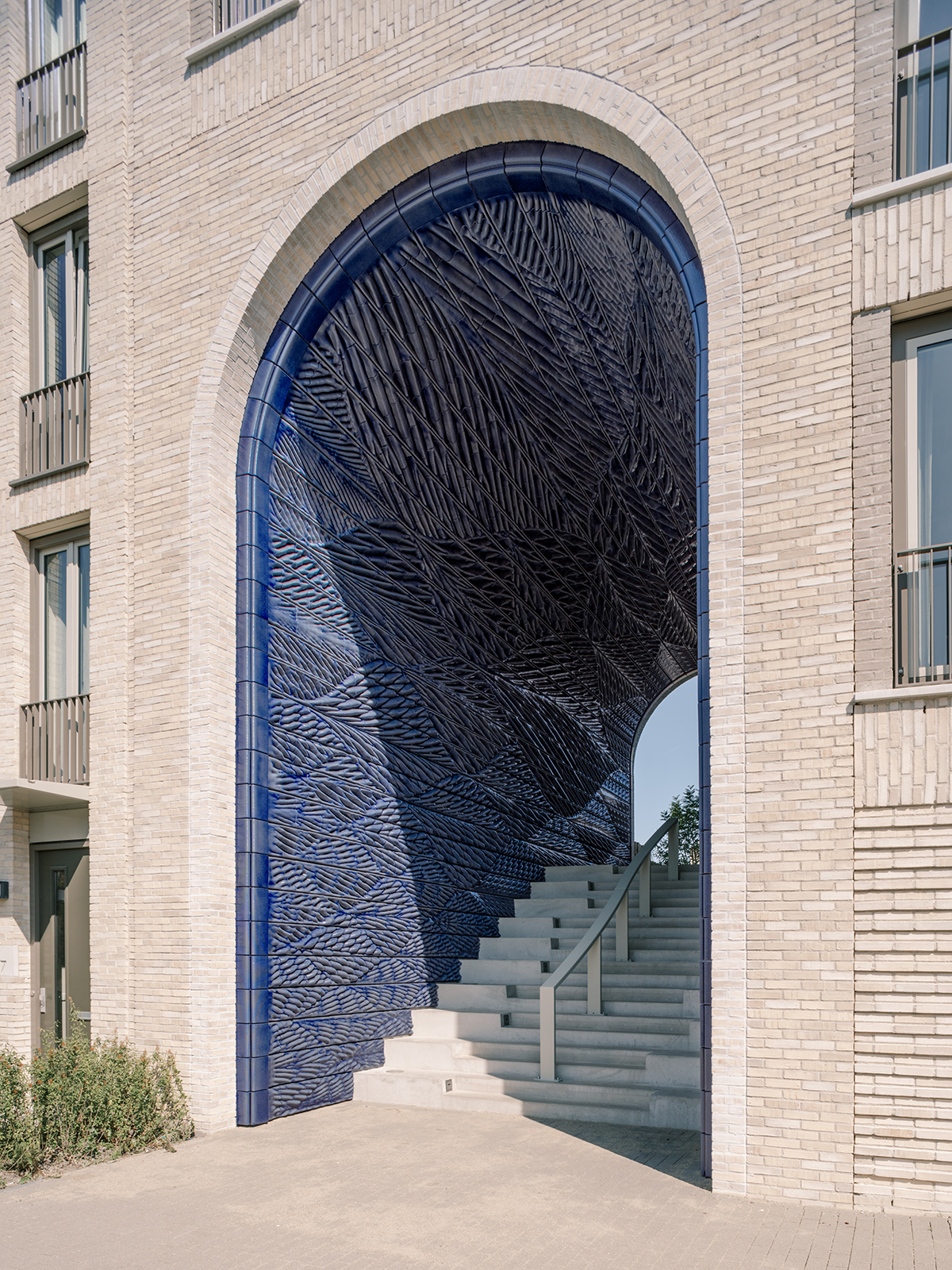



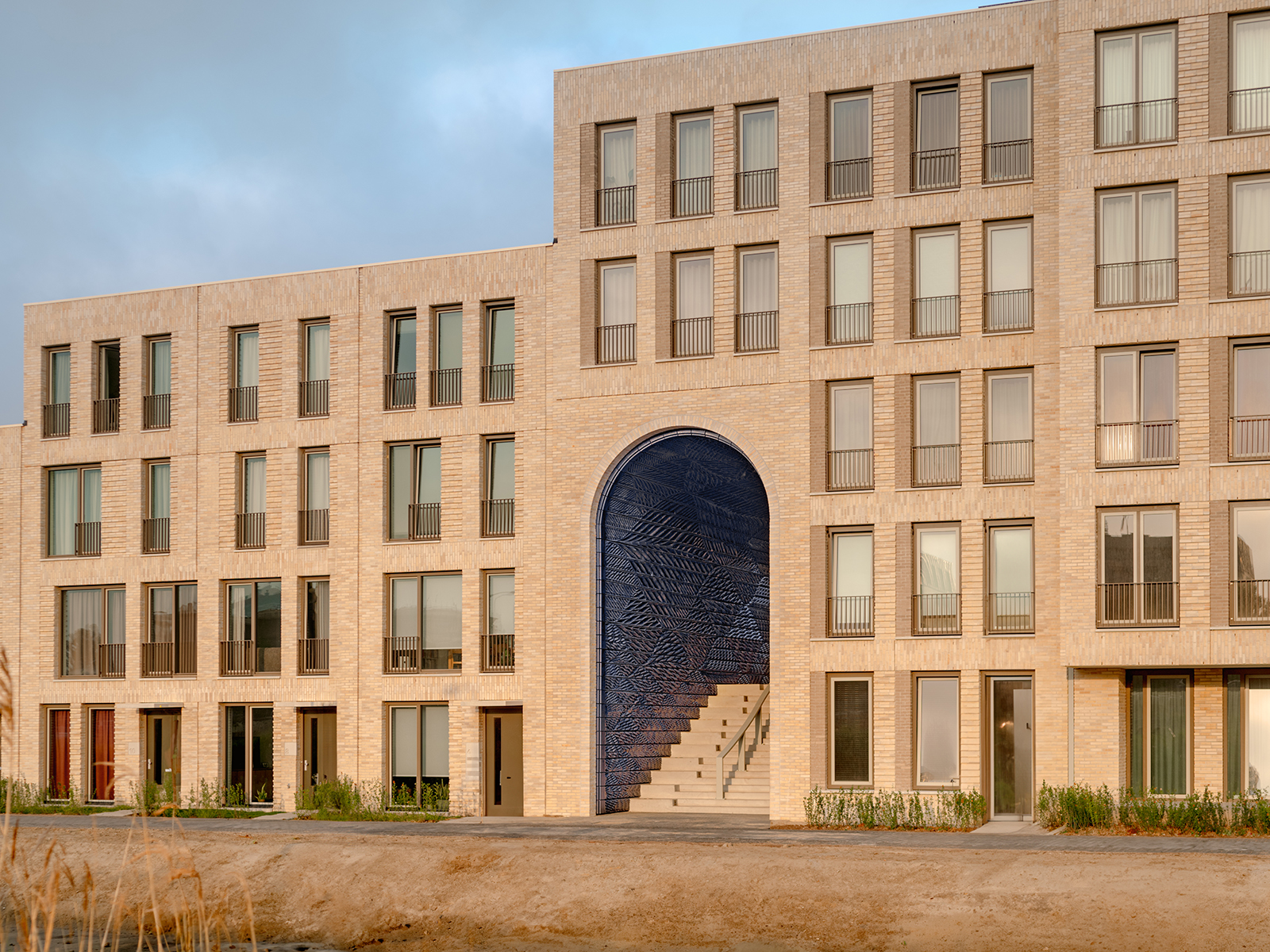


New Delft Blue is a 3D-printed ceramic facade in the historic city of Delft, designed and produced by Studio RAP. It reinterprets the decorative qualities and design vocabulary of Delft Blue porcelain, combining 3D clay printing, computational design, and artisanal glazing into a contemporary form of ceramic ornamentation.
The design
The project frames the communal courtyard of the PoortMeesters residential block, part of the Nieuw Delft urban redevelopment, with two large entry gates. Each gate is roughly four metres wide, eight metres high, and twelve metres deep, and covers a large public staircase. The gates refer to Delft as a medieval trading city with its many city gates, and give passers-by a glimpse of the courtyard inside.
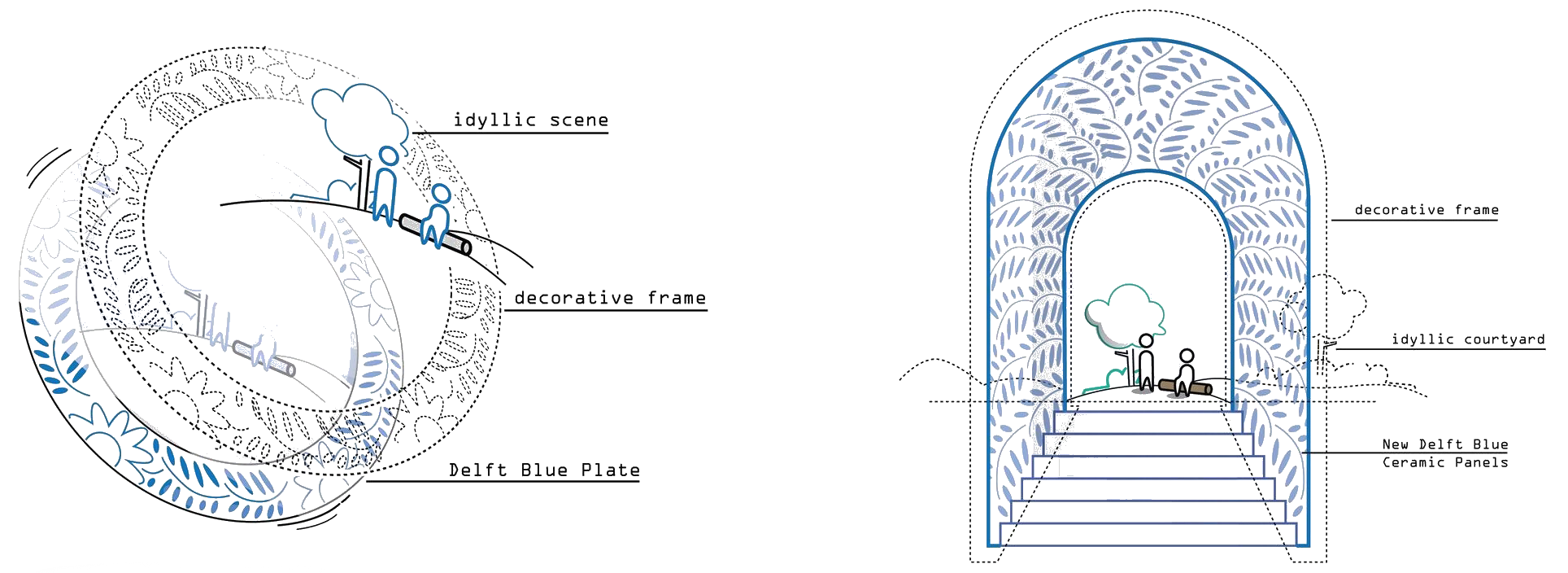
The design takes its cue from traditional Delft Blue porcelain plates, whose vocabulary shifted over the centuries from copying Chinese and Japanese designs to contemporary Dutch ones, while keeping a recurring division between a decorative, nature-inspired frame and an idyllic scene. That division is the starting point here: the idyllic scene is the changing life of the courtyard, while the gates form a three-dimensional frame of algorithmically designed, nature-inspired patterns that guide people from the public space into the semi-public courtyard.
3D-printed ceramics
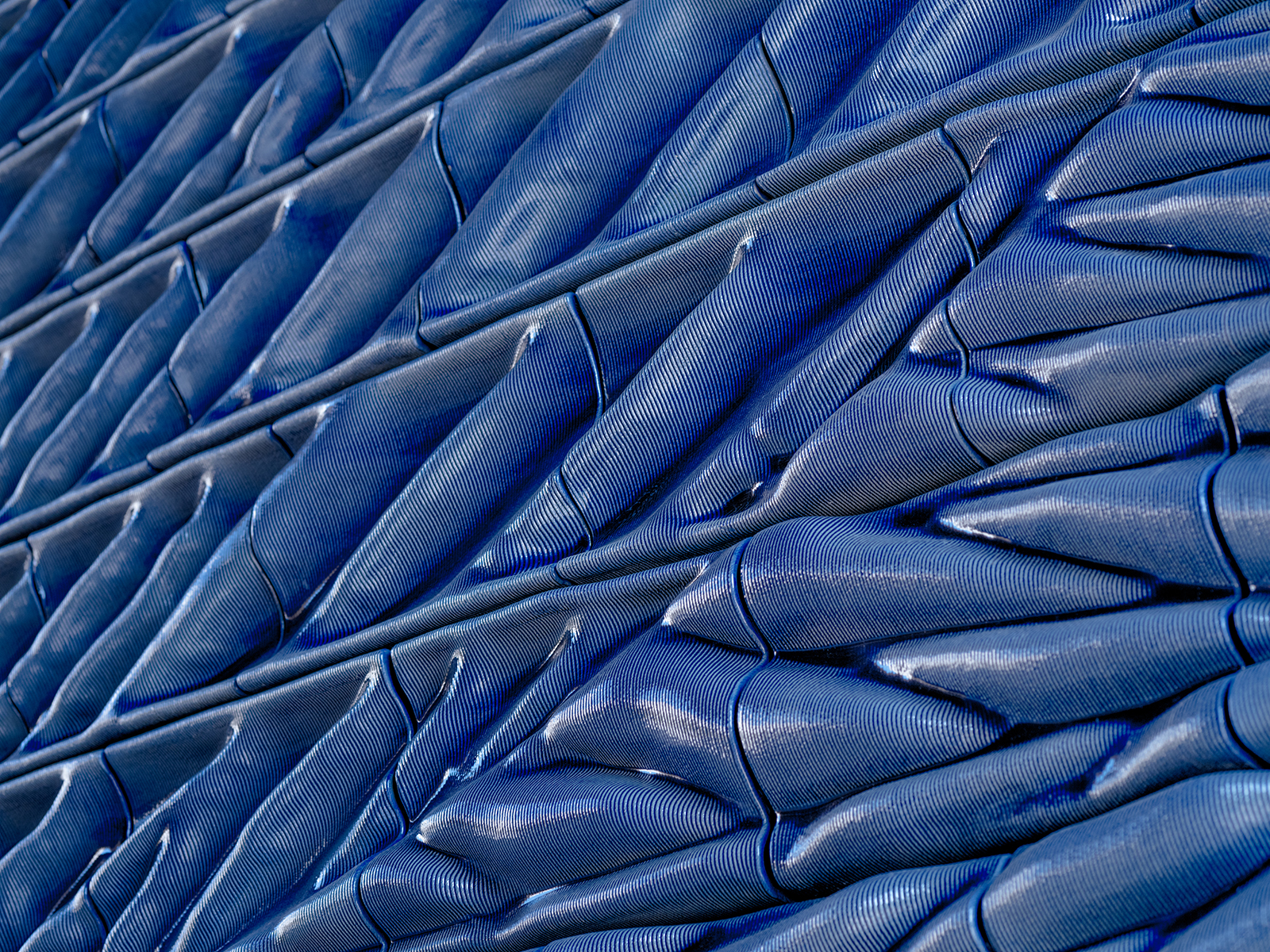
The two gates are covered with approximately 3,000 unique 3D-printed ceramic tiles. An algorithmic approach to the pattern design accounts for the constraints of clay printing: maximum overhang, width, height and depth, shrinkage, and internal support structure. Because each tile is printed, varying its shape becomes a way of "painting with shapes". A transparent blue runny glaze reads as light blue on the convex hills of the tiles and pools into deep blue in the concave valleys, creating smooth transitions between hues. The deep blue connects to Delft Blue porcelain and the surrounding canals, and contrasts with the earth-toned brickwork of the building.
Together, the project expresses the identity of Delft in a contemporary way: referring to its history through nature-inspired patterns in blue, and to the Delft of today as a city of knowledge through computational design and 3D-printing technology.
The design
The project frames the communal courtyard of the PoortMeesters residential block, part of the Nieuw Delft urban redevelopment, with two large entry gates. Each gate is roughly four metres wide, eight metres high, and twelve metres deep, and covers a large public staircase. The gates refer to Delft as a medieval trading city with its many city gates, and give passers-by a glimpse of the courtyard inside.
The design takes its cue from traditional Delft Blue porcelain plates, whose vocabulary shifted over the centuries from copying Chinese and Japanese designs to contemporary Dutch ones, while keeping a recurring division between a decorative, nature-inspired frame and an idyllic scene. That division is the starting point here: the idyllic scene is the changing life of the courtyard, while the gates form a three-dimensional frame of algorithmically designed, nature-inspired patterns that guide people from the public space into the semi-public courtyard.
3D-printed ceramics
The two gates are covered with approximately 3,000 unique 3D-printed ceramic tiles. An algorithmic approach to the pattern design accounts for the constraints of clay printing: maximum overhang, width, height and depth, shrinkage, and internal support structure. Because each tile is printed, varying its shape becomes a way of "painting with shapes". A transparent blue runny glaze reads as light blue on the convex hills of the tiles and pools into deep blue in the concave valleys, creating smooth transitions between hues. The deep blue connects to Delft Blue porcelain and the surrounding canals, and contrasts with the earth-toned brickwork of the building.
Together, the project expresses the identity of Delft in a contemporary way: referring to its history through nature-inspired patterns in blue, and to the Delft of today as a city of knowledge through computational design and 3D-printing technology.
About Studio RAP
Studio RAP is a Rotterdam-based team of architects that combines architecture with in-house manufacturing and craftsmanship, bringing bespoke detail back into architectural design. New Delft Blue is one expression of that approach.
Location: Nieuw Delft, Delft (NL)
Development: BPD (Bouwfonds Property Development), Ballast Nedam
Construction: Ballast Nedam Bouw West
Architect New Delft Blue: Studio RAP
Contractor & 3D ceramic printing: Studio RAP
Glazing & firing: Koninklijke Tichelaar
Architect PoortMeesters: VY Architects
Mounting: Kooistra Geveltechniek
Rear structure: Lomax Systems
Photography: Riccardo De Vecchi
Film: Oculus Film
Studio RAP is a Rotterdam-based team of architects that combines architecture with in-house manufacturing and craftsmanship, bringing bespoke detail back into architectural design. New Delft Blue is one expression of that approach.
Location: Nieuw Delft, Delft (NL)
Development: BPD (Bouwfonds Property Development), Ballast Nedam
Construction: Ballast Nedam Bouw West
Architect New Delft Blue: Studio RAP
Contractor & 3D ceramic printing: Studio RAP
Glazing & firing: Koninklijke Tichelaar
Architect PoortMeesters: VY Architects
Mounting: Kooistra Geveltechniek
Rear structure: Lomax Systems
Photography: Riccardo De Vecchi
Film: Oculus Film